Explainer · Reasoning models

Chain-of-thought vs other approaches

Chain-of-thought buys capability with compute. How does that trade-off compare with simply answering directly, retrieving facts, or reaching for tools? This page sets them side by side.

← Back to Infographics
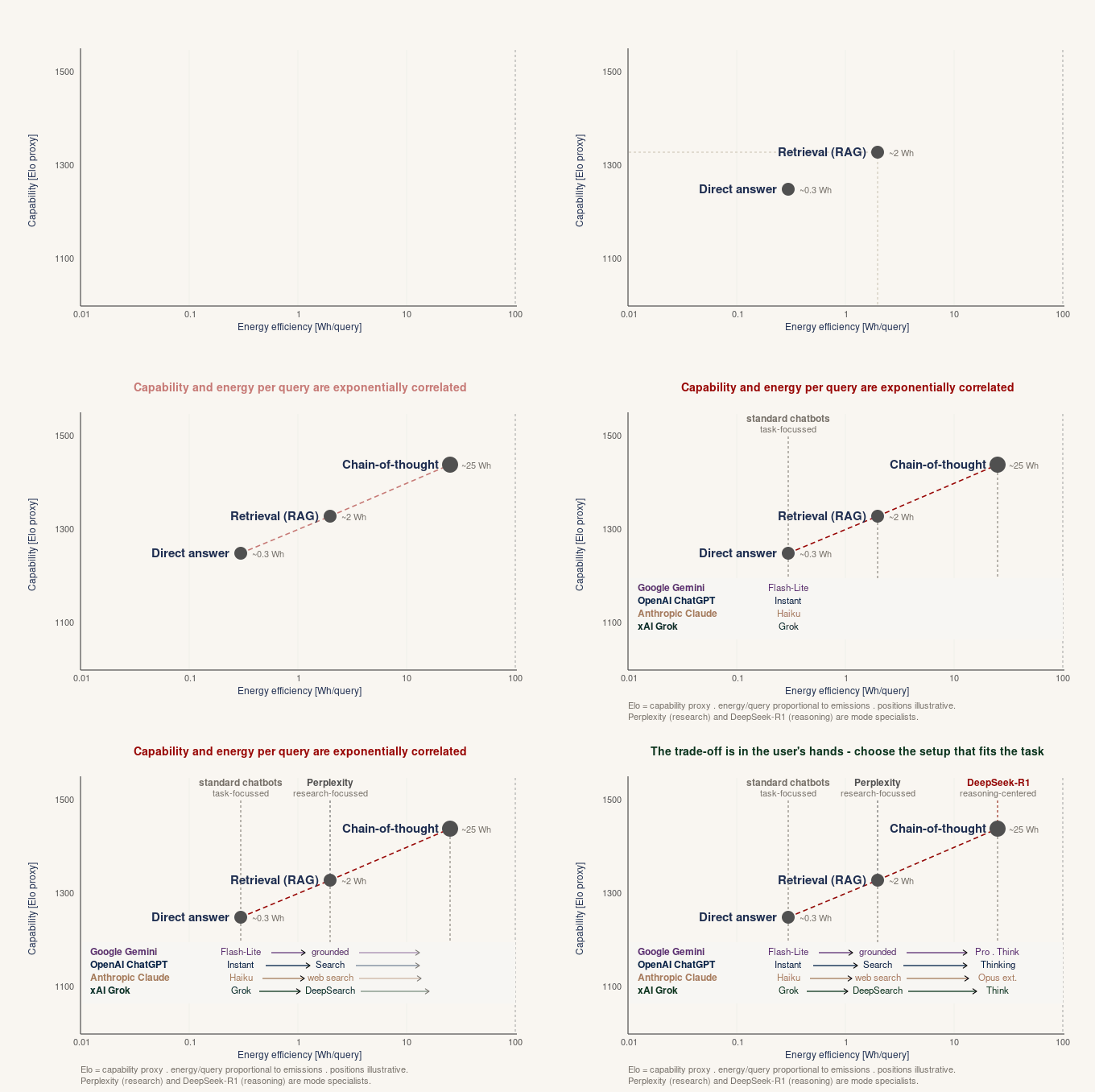
Animated scatter: capability (Elo proxy) versus energy efficiency (Wh per query) building up across direct answering, retrieval and chain-of-thought, with the leading LLMs spanning all three modes.
Capability rises with the energy each query burns — and most leading models let you dial the mode. (Static version available for print.)

Where chain-of-thought wins

  • Stronger on complex, multi-step problems — maths, code, planning.
  • Can self-check and catch its own errors before answering.
  • Parallel sampling of reasoning paths boosts reliability.
  • The intermediate steps are (somewhat) inspectable.

What it costs

  • Far higher compute, latency, energy and cost per query.
  • The shown reasoning isn't always faithful to the real computation.
  • Diminishing returns — and "overthinking" on simple prompts.
  • A wrong early step can propagate through the whole chain.