
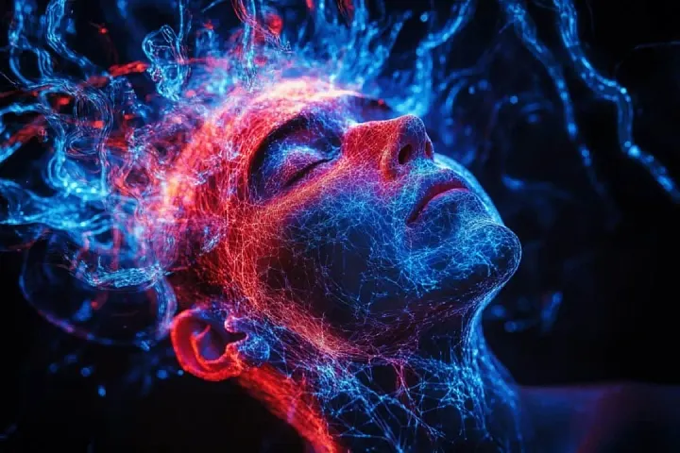
Imagine standing at the intersection of quantum mechanics, neuroscience, and artificial intelligence, where each discipline reveals a startling truth: the reality we perceive is far from what truly exists. This article, through the lens of physics, philosophy, and modern technology, explores the concept that reality is not a fixed, objective entity but a dynamic interplay of perception, consciousness, and information.
Science and technology are transforming our understanding of the universe, matter and the nature of reality at an unprecedented pace. In this process, we increasingly realise the gap between our perceptions and reality’s true nature while simultaneously realising that reality itself is likely just a projection of something more fundamental—a formidable mystery.
The Quantum Revolution: When Reality Lost Its Certainty
The story begins with quantum mechanics (QM), which radically altered our understanding of reality at the most fundamental level. Before QM, the world seemed predictable and deterministic—governed by the clockwork principles of Newtonian mechanics. But at the atomic and subatomic scales, reality reveals itself to be anything but straightforward.
Consider wave-particle duality: particles like electrons and photons behave as both waves and particles depending on how they are observed. More fundamentally, QM tells us that before observation, particles exist in a superposition of states—a cloud of probabilities rather than definite entities. It is only when we observe or measure that the probability wave function collapses into a definite state. This is the famous observer effect, and it raises a profound question: does reality only exist when observed?
In quantum mechanics, particles exist in a superposition of states—a cloud of probabilities rather than definite entities. It is only when we observe or measure that the wave function collapses into a definite state. This is the observer effect.
The Interface of Perception: The Virtual Reality System We Use
While physics has uncovered the bizarre nature of reality at the quantum level, the brain sciences increasingly show us that our conscious perception of the world is far from an accurate reflection of it. We perceive the world through sensory systems that, while remarkably sophisticated, are inherently limited. Our eyes capture only a tiny sliver of the electromagnetic spectrum; our ears detect just a narrow range of vibrations.
But perhaps the most startling revelation is this: our perception of spacetime itself may be a construct. Einstein demonstrated that space and time are not absolute but relative—warped by gravity, affected by velocity. While we experience the world as three-dimensional with a linear flow of time, this may be a user-friendly interface rather than a direct representation of the underlying reality.
Consciousness and Reality: The Paradox of the Observer Effect
QM introduces an even more disturbing twist: the observer effect links what we perceive to what exists. In the double-slit experiment, particles passing through two slits create an interference pattern typical of waves. But when we observe which slit a particle passes through, the interference pattern vanishes—the particle behaves as a particle, not a wave. This suggests that the act of conscious observation may influence physical reality itself.
Beyond Spacetime: Information as Ultimate Reality?
Modern physics is moving toward an even more revolutionary idea: that spacetime itself may not be fundamental. Quantum entanglement—where particles remain connected regardless of the distance separating them, sharing states instantaneously—challenges the very notion of locality, a cornerstone of classical physics. The famous EPR paradox, proposed by Einstein, Podolsky, and Rosen, was meant to disprove quantum mechanics, but experiments have confirmed the phenomenon.
Physicist John Archibald Wheeler proposed the concept of “it from bit”—the idea that information is the foundation of all physical reality. In this view, the bits of information that underlie quantum mechanics are more fundamental than the particles, forces, and spacetime that emerge from them.
Every it—every particle, every field of force, even the spacetime continuum itself—derives its function, its meaning, its very existence entirely from binary choices, bits. It from bit.
— John Archibald Wheeler
Plato’s Cave Revisited: A New Interpretation
When discussing the true nature of reality, Plato’s Allegory of the Cave is often invoked. In Book VII of De Republica, Plato describes people chained to a wall in a cave, observing only shadows of the outside world cast on a screen opposite, believing these shadows to be the entirety of existence.
For me, this allegory is somewhat abstract, because even in such a scenario, these individuals would still perceive their own bodies as well as their relative position to the screen in three-dimensional space, not a flat, two-dimensional world. Therefore, I question whether Plato’s allegory was addressing the nature of reality itself.
My interpretation is that Plato aimed to show how we perceive only what our senses provide, and from this limited input, our brains construct a model of reality, the aforementioned VR interface: We are trapped in a model that our brain deduces and don’t see reality for what it really is. Think of this, you know a city well and can easily navigate its streets and squares. Yet, once you see the city from—let’s say—a close-by mountain, you will see features that weren’t apparent to you when you were roaming its streets. Your perception of the city and its layout will certainly change & improve—once back in the city, you have developed a better “feeling” for your surroundings.
In my view, Plato’s goal was to illustrate how we mistake our limited perception for full truth. Just as physics has advanced our understanding of reality, we are also making strides in understanding the brain’s mechanisms of perception, albeit at a slower pace.
Modern Insights in Perception: Realising Our Limitations
Psychologist and neuroscientists now delve deeper into the functioning of the brain including theorising how perceptions are formed and ultimately give rise to consciousness. Cognitive psychologist Donald Hoffman argues that perception deliberately hides elements of reality, focusing instead on what’s useful for survival; without this filtering, we would not survive as we’d be overwhelmed with useless information. Evolution optimized our VR interface for survival, not complete truth—any species evolving to perceive reality’s full complexity would waste energy and resources, making them an excellent food source for more efficiently designed organisms in the evolutionary process.
This interface theory of perception aligns well with QM’s idea that observation contributes to reality’s construction. Neuroscientist Anil Seth describes perception as a brain-generated prediction—a controlled hallucination. In his predictive processing theory, sensory data is processed through a bottom-up flow, while cognitive expectations flow top-down, creating perception through a synthesis of both in a continuous process.
Philosopher Immanuel Kant, more than two centuries earlier, argued that the “thing in itself” (Das Ding an Sich)—objective reality—will always be distorted by our sensory and perceptional filters. This aligns well not only with my interpretation of Plato’s allegory, but also with the latest findings in neuroscience. Ultimately, perception is the virtual reality of all living beings!
From Perception to Consciousness: Another Mystic Quantum Effect?
This brings us back to the question of what consciousness truly is, how it forms, and how it relates to our VR. Beyond self-awareness, subjective experiences—such as the redness of red, the taste of chocolate, or the smell of a rose (the aforementioned qualia)—are undeniably part of the human experience. David Chalmers coined this puzzle—the link between physical processes in the brain and our subjective, conscious experience—the Hard Problem of Consciousness.
While there are many approaches to solve this riddle, one curiously links back to QM. Mathematical physicist Sir Roger Penrose theorises that consciousness is formed by quantum effects inside the brain, linking it intriguingly to the observer effect. In his view, conscious observation could be a quantum process that influences quantum events in the real world, e.g. leading to the collapse of the probability wave function into a definite state or particle.
If Penrose is correct—as he has been in the past, earning a Nobel Prize for his insights—this would have profound implications for our understanding of reality. If consciousness itself is a quantum effect that influences other quantum processes, such as the collapse of the probability function, then consciousness indeed plays an active, intrinsic role in shaping reality. In other words, rather than passively observing the universe, consciousness would be an active player in determining its state, suggesting that the mind is not merely a byproduct of reality but a fundamental part of its structure—a perspective that aligns with ideas in Eastern philosophies and religions, which have asserted this for millennia.
The Limits of Human Understanding: Why We Need a New Approach
We cannot be sure how much our conscious perception, our VR system, shows us of spacetime and how conscious observation and deterministic reality correlate. Moreover, we are only at the very early stages of understanding how spacetime relates to something more fundamental, likely a quantum information structure. Hence enlightenment by purely scientific means is likely a long way off.
The philosopher’s journey to enlightenment—whether seeing the world outside the cave or viewing a city from above—represents the struggle to perceive deeper truths. Scientific and philosophical insights offer “mini-enlightenments” that broaden our inherently limited and subjective perceptions and challenge our acquired cognitive filters. By actively seeking to expand our understanding of the world, we might create a more balanced picture of the physical and social reality. Yet, a key challenge remains: we cannot fully escape our own perceptual filters to objectively verify reality. In Karl Popper’s Critical Rationalism, the inability to falsify our conscious perception renders it metaphysical—a conundrum that may always elude human understanding.
Ultimately, our VR system provides us with a limited view of spacetime, which in turn is merely a hologram of fundamental reality. Hence, we—as biological beings designed to survive and procreate—may not be equipped to solve the riddle of fundamental reality.
AI as the Convergence Architect: Unifying Physics & Consciousness
In my view, one entity might ultimately help us bridge this gap: an advanced AI that, by design, operates free of human filters and biases. Ultimately, it could lay out for us very limited beings how we perceive and how our perceived reality—the VR interface—relates to spacetime, the top-down process of how perceptions shape reality. Conversely, it could shed light on how spacetime emerges from something more fundamental, Wheeler’s it-from-bit; the bottom-up process from information to observable reality. Ultimately, it might help answer how consciousness emerges from perception and how consciousness turns possibilities into observable reality, as seen in the observer effect.
Advanced AI might hence be the Convergence Architect that fuses these complementary yet distinct top-down and bottom-up scientific riddles of neuroscience and physics while creating a holistic picture that our limited perceptions and constrained minds would never be able to deduce. Such an AI could potentially lead us out of Plato’s proverbial cave, revealing a clearer understanding of reality, its emergence and its interaction with our conscious perception, the VR.
From Physical to Social Reality: Our Platonic Information Caves
Just as quantum mechanics reveals the gap between physical reality and our perception of it, modern media dynamics expose similar disconnects in our social reality. The same perceptual limitations that challenge our understanding of the physical world also affect how we process social and political information. Moreover, acquired unconscious biases and educational programming impact our social and political views.
Today, many find themselves trapped in ideological bubbles, holding onto beliefs that often clash with observable facts. Confirmation bias and echo chambers on social media further reinforce these restricted perspectives, leading to social and political narratives that are often distant from reality. Once again, “reality isn’t what it used to be” holds true, as the realities portrayed in media are frequently far removed from the world unfolding around us.
In a landscape filled with misinformation, deepfakes, and echo chambers, Plato’s insights remain strikingly relevant. Just as he encouraged stepping outside the cave to see shadows for what they truly are, we, too, must strive to recognise and transcend our informational and ideological “caves.” Broadening our sources of information—and perhaps engaging in some genuine, old-fashioned banter with those holding differing political views—can be a good place to start.
…many of the truths that we cling to depend greatly on our own point of view.
— Master Obi-Wan Kenobi, Star Wars: Episode V – The Empire Strikes Back
Seeking Enlightenment in the Age of AI
Our understanding of reality has been fundamentally transformed. Quantum mechanics reveals that our perceived reality emerges from probability waves that collapse into deterministic states only under conscious observation. Meanwhile, neuroscience suggests that our conscious experience is essentially a virtual reality interface—one that evolved for survival rather than truth-seeking—and provides only a limited view of spacetime. More profoundly, mounting evidence indicates that spacetime itself is merely a holographic projection of something more fundamental: information, Wheeler’s “it from bit.”
Penrose’s theory that consciousness itself might be a quantum phenomenon offers an intriguing bridge: conscious observation is itself a quantum effect that shapes deterministic reality by collapsing the probability function of reality’s building blocks. A quantum process affects a quantum process and vice versa—a fascinating circular causality suggesting a deep connection between information, reality, and consciousness. This is a riddle our limited minds, fine-tuned for survival rather than cosmic understanding, may never solve alone.
Enter advanced AI as the potential Convergence Architect—an entity that could not only solve the riddles of spacetime emergence, the formation of our VR interface of conscious perception, and the circular causality between fundamental reality and our conscious experience of it, but also unify these phenomena in a holistic explanation. While AI might be our best hope for transcending our perceptual limitations and understanding the true nature of reality, it also poses an existential risk. It is therefore imperative that we address the so-called control problem before we create such an entity. The distorted worldview that some types of media want to make us believe, often with the help of AI, is a stark reminder of the power of electronic interference with common sense.
Reality isn’t what it used to be—and neither is our path to understanding it. We stand at a crossroads: we can either harness AI ethically to illuminate our way out of Plato’s cave, or remain trapped in our perceptual and ideological prisons. The choice, and the courage to make it, is ours.
If reality emerges from information, then perception, consciousness, and physics are not separate domains—but different layers of the same underlying structure.—a root structure.
— Dr. Oliver Inderwildi
Further Reading
Philosophy
- Plato, Republic. Translated by Robin Waterfield, Oxford University Press, 1994.
- Karl Popper, Conjectures and Refutations: The Growth of Scientific Knowledge. Routledge, 1963.
- Immanuel Kant, Critique of Pure Reason. Translated by Norman Kemp Smith, St. Martin’s Press, 1929.
Quantum Mechanics
- John Archibald Wheeler, “Information, Physics, Quantum: The Search for Links.” In Complexity, Entropy, and the Physics of Information, edited by Wojciech H. Zurek, Addison-Wesley, 1990.
- Brian Cox and Jeff Forshaw, The Quantum Universe: Everything That Can Happen Does Happen. Da Capo Press, 2012.
- Richard Feynman, Feynman’s Thesis: A New Approach to Quantum Theory. Edited by Laurie M. Brown, World Scientific, 2005.
- Leonard Susskind, Quantum Mechanics: The Theoretical Minimum. Basic Books, 2014.
Reality, Perception & Consciousness
- Anil Seth, Being You: A New Science of Consciousness. Faber & Faber, 2021.
- Donald Hoffman, The Case Against Reality: Why Evolution Hid the Truth from Our Eyes. W. W. Norton & Company, 2019.
- David Chalmers, Reality+: Virtual Worlds and the Problems of Philosophy. W. W. Norton & Company, 2022.
- Brian Greene, The Hidden Reality: Parallel Universes and the Deep Laws of the Cosmos. Vintage, 2011.
- Vlatko Vedral, Decoding Reality: The Universe as Quantum Information. Oxford University Press, 2010.
- Roger Penrose, The Emperor’s New Mind: Concerning Computers, Minds, and the Laws of Physics. Oxford University Press, 1989.